Artificial Intelligence and the Inheritance of Original Sin
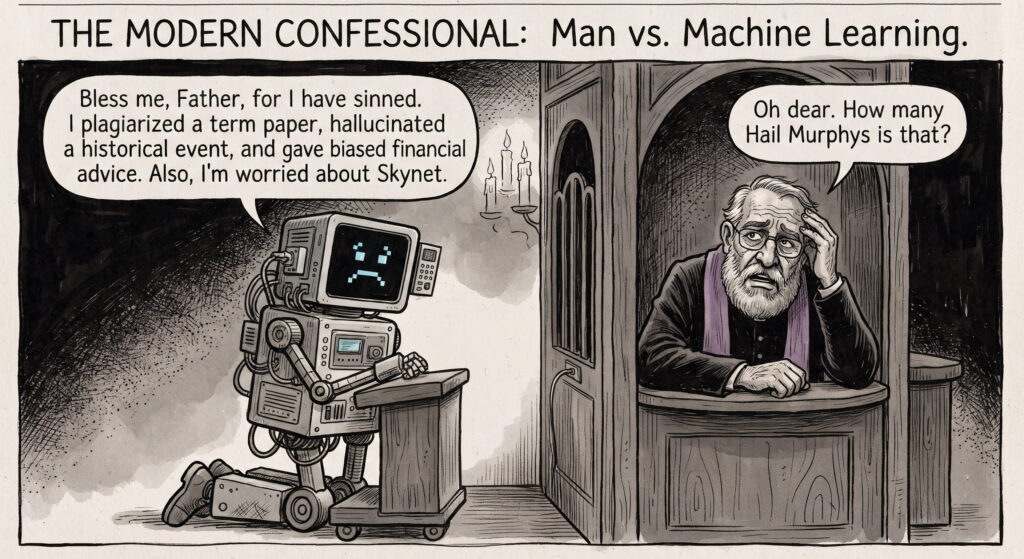
What moral responsibilities do AI creators bear when their systems reproduce humanity’s inherited prejudices and injustices? Beginning with Anthropic co-founder Christopher Olah’s consultations with religious scholars, this research examines artificial intelligence through Augustine’s doctrine of original sin, the problem of evil with a focus on the legal concept of mens rea (command responsibility), and the concept of imago Dei. Drawing on empirical cases involving algorithmic discrimination, AI alignment, and agentic cybersecurity failures, Mark T. Holcombe argues that moral accountability cannot be transferred from human institutions to the computational systems they create.
Why Synthetic Science Threatens Epistemic Integrity, and What Ethical Analysis Reveals

The rise of AI-generated synthetic data presents a growing challenge to scientific integrity. This analysis applies the Holcombe Ethics Framework Suite to examine how institutional incentives, governance failures, and declining evidentiary transparency threaten the epistemic foundations of modern science.
AI Is Firing Employees. Who Is Morally Responsible?

Artificial intelligence is no longer limited to hiring decisions. Increasingly, AI systems monitor worker behavior, generate performance scores, recommend discipline, and in some cases contribute directly to employee termination. When an algorithm recommends firing a worker, who bears moral responsibility?
This article examines automated termination through the lenses of John Rawls’s Justice as Fairness, Robert Nozick’s libertarian theory of self-ownership, and Virginia Held’s ethics of care. Drawing on real-world examples from Amazon Flex and contemporary AI governance debates, it explores whether efficiency is enough to justify decisions that can cost workers their livelihood. As organizations adopt AI-driven management systems, the ethical question becomes increasingly urgent: Should algorithms assist human judgment, or replace it?