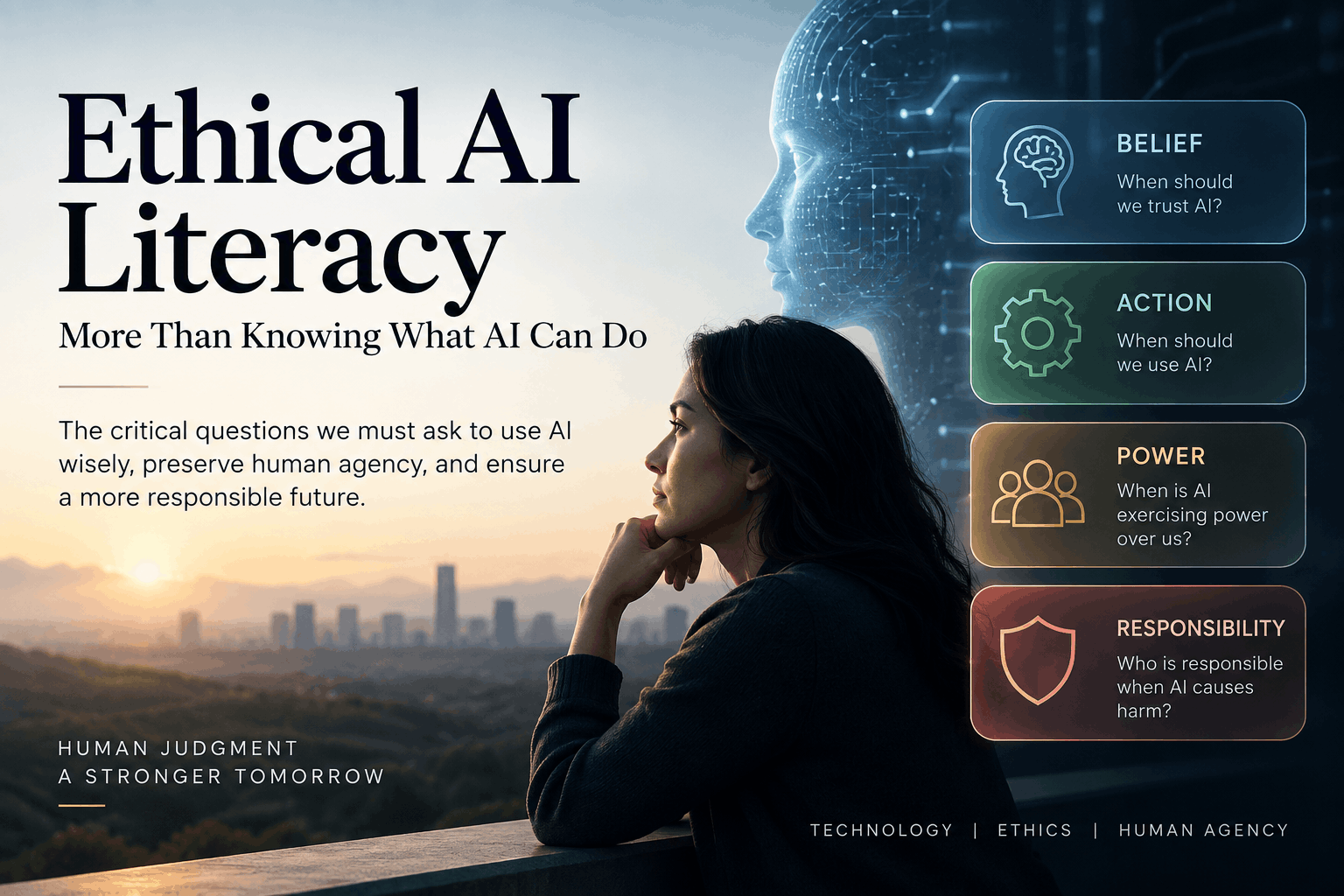
Why AI Literacy Requires Ethical Literacy
AI literacy is not enough. Using artificial intelligence responsibly also requires the capacity to decide when AI should be trusted, when it should be used,
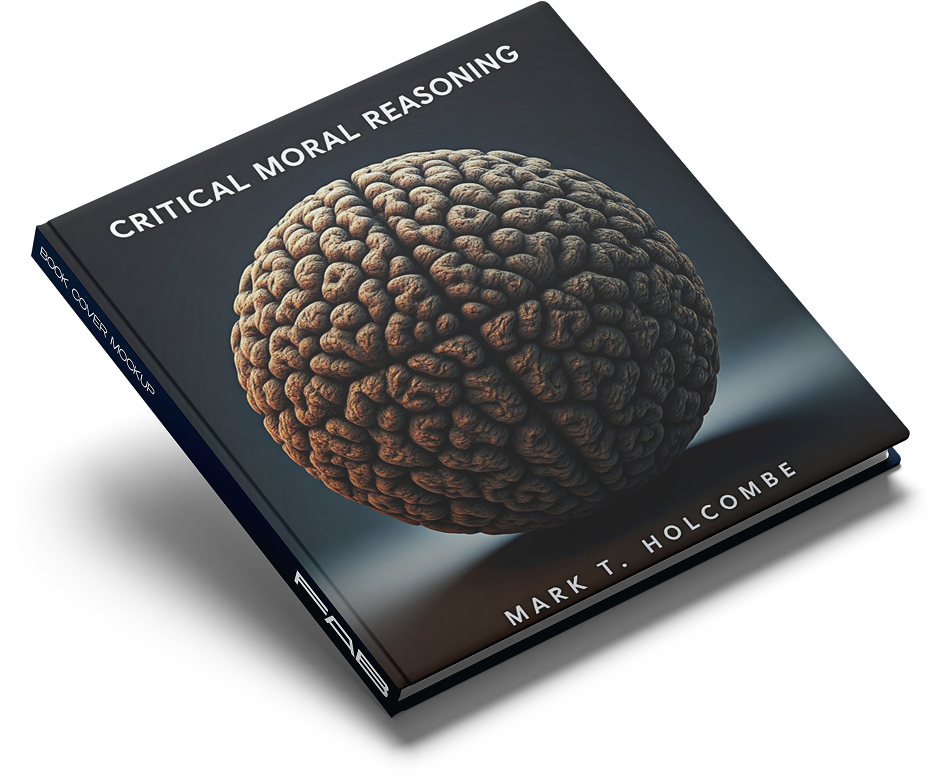
As founder of Mentat AI Consulting, Holcombe advises schools, nonprofits, and small businesses on responsible AI use. His book Critical Moral Reasoning redefines ethics education through real-world case studies and empirical moral logic, positioning him as a leading voice in AI ethics and educational innovation.
Critical Moral Reasoning offers a bold, modern take on ethics, blending moral philosophy with real-world case studies, empirical research, and practical reasoning skills. It challenges conventional approaches by integrating insights from moral psychology, rethinking classic theories like Rawls without political framing, and addressing timely issues such as generative AI and virtue ethics. Designed for students, critical thinkers, and those seeking help in writing a book on complex ethical topics, this book redefines how we engage with morality in today’s rapidly changing world.
Explore how moral philosophy meets everyday life, emerging tech, and the evolving classroom.
Why Traditional Ethics Education Falls Short in the 21st Century
Discover why outdated anthologies no longer serve today’s learners and what to replace them with.
Rawls Reframed: A Libertarian Critique of Justice Without Politics
A fresh look at John Rawls that strips away policy debates to focus on core moral reasoning.
Teaching Ethics in the Age of AI: Practical Tools for Educators
Empower students to think critically about generative AI and its ethical implications.

AI literacy is not enough. Using artificial intelligence responsibly also requires the capacity to decide when AI should be trusted, when it should be used,


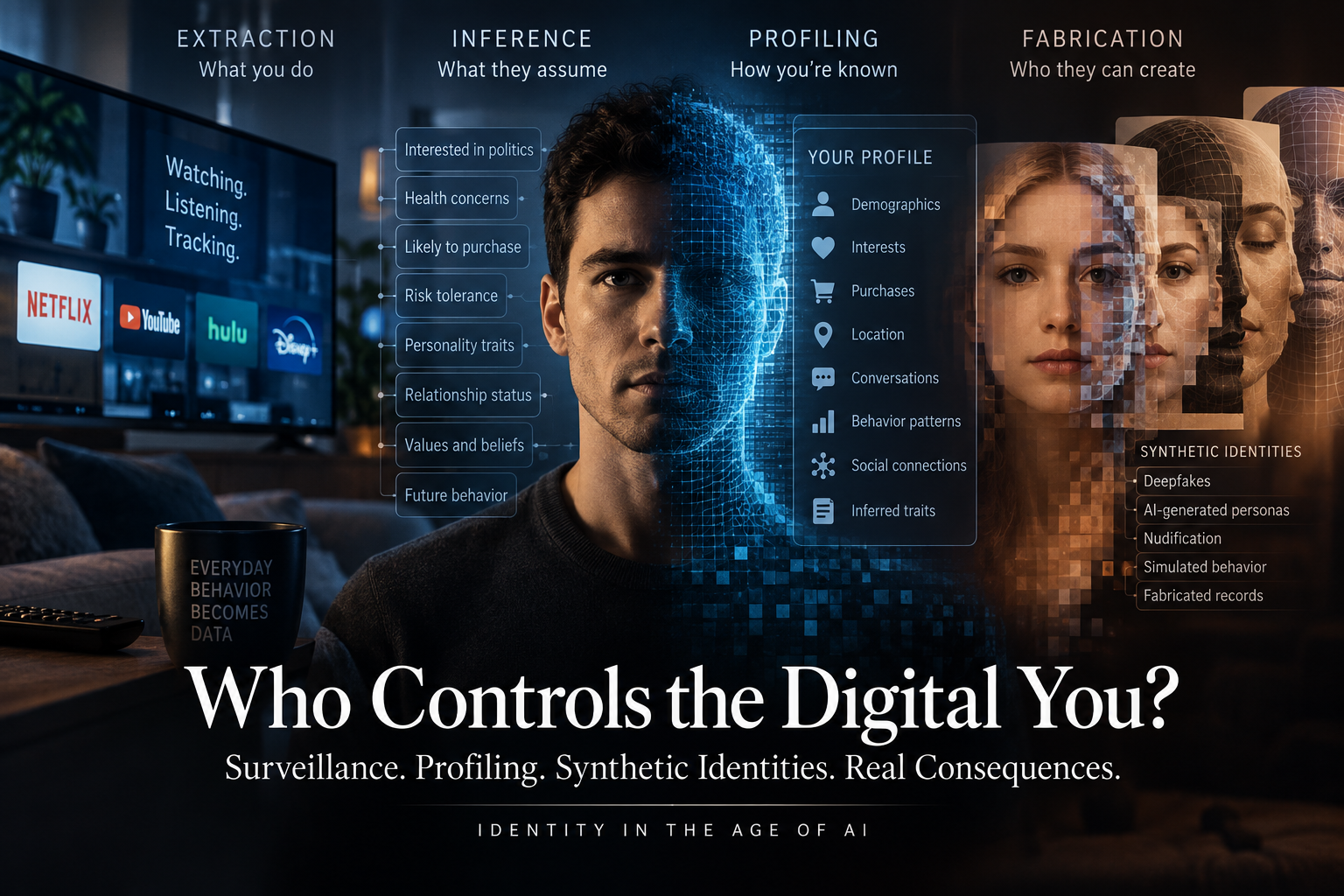
Digital systems no longer merely collect information about people. They can observe behavior, infer characteristics, construct persistent profiles, and fabricate new representations attached to recognizable

The rise of agentic artificial intelligence creates a responsibility problem before it creates a consciousness problem. Mark T. Holcombe examines functional agency, moral patienthood, AI
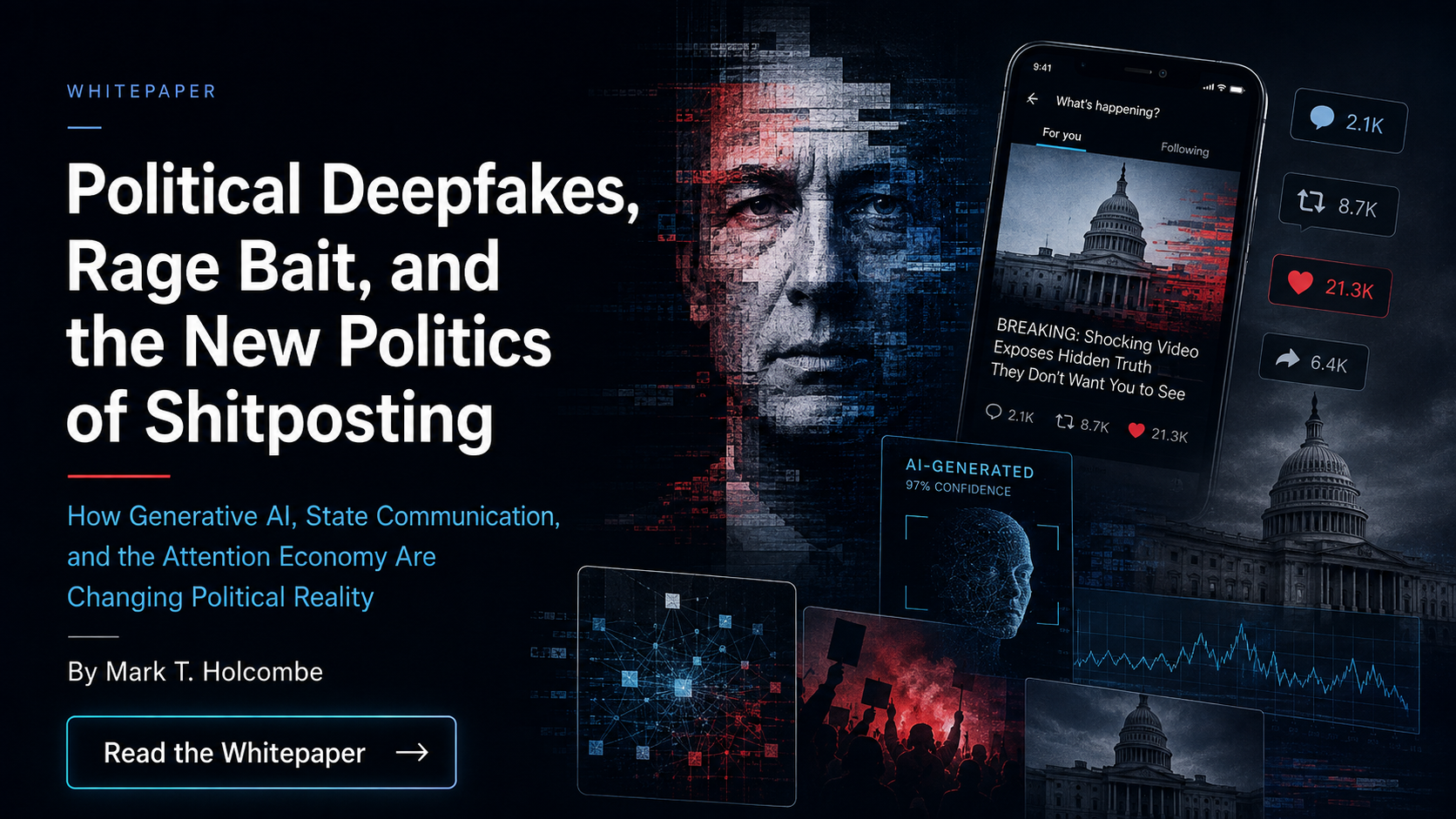
As the 2026 midterm election cycle accelerates, voters are entering an information environment shaped not only by political deepfakes, but also by rage bait, AI-generated

Artificial intelligence is transforming identity from something primarily embodied and relational into a distributed digital construct that can be observed, predicted, synthesized, and manipulated. This

What happens when a city regulates AI infrastructure but fails to give affected communities a meaningful role in deciding where its burdens fall?
Birmingham’s
Have questions about Critical Moral Reasoning, interest in review copies, or want to connect with the author or publisher? Reach out through the form below. We’d love to hear from you.
Lorem Ipsum is simply dummy text of the printing and typeset tingindustry Lorem Ipsum has been the industrys standard.