Why AI Literacy Requires Ethical Literacy
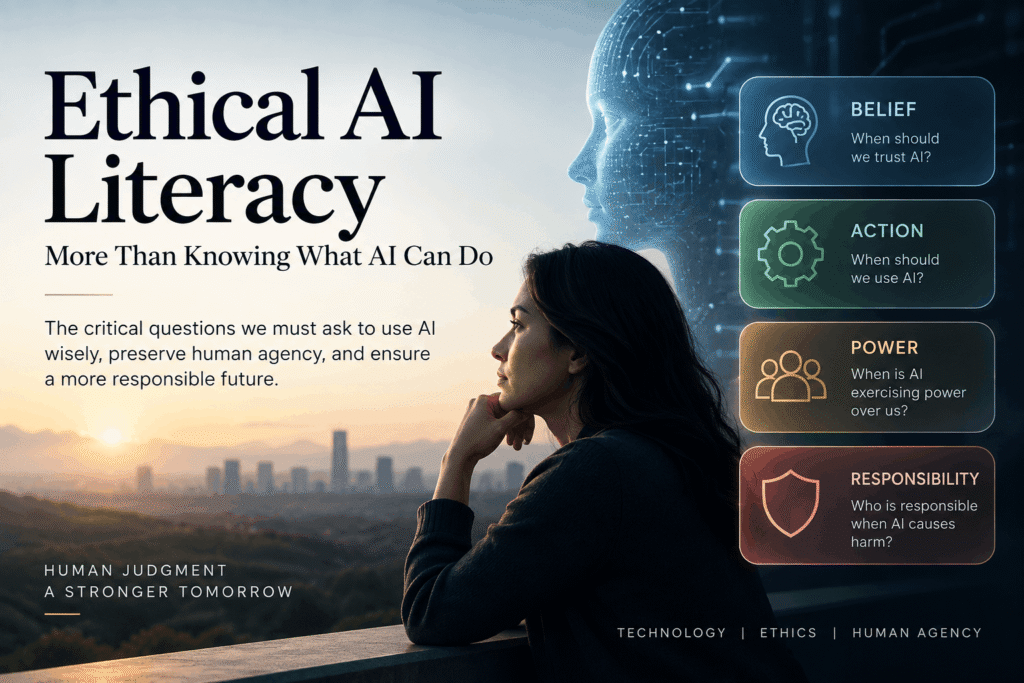
AI literacy is not enough. Using artificial intelligence responsibly also requires the capacity to decide when AI should be trusted, when it should be used, when it is exercising power over us, and who remains responsible when harm occurs. Ethical AI Literacy connects technological competence to the moral reasoning necessary to preserve human agency in an AI-mediated world.
Who Controls the Digital You? Surveillance, AI Profiling, and Synthetic Identity
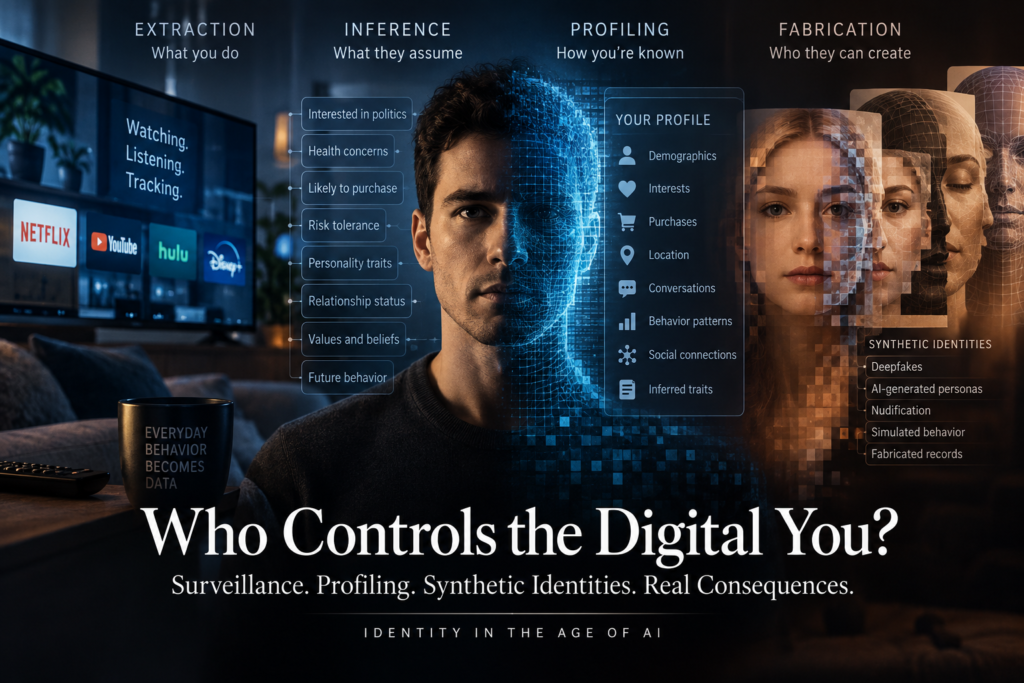
Digital systems no longer merely collect information about people. They can observe behavior, infer characteristics, construct persistent profiles, and fabricate new representations attached to recognizable identities. Smart-TV tracking, conversational AI memory, and synthetic nudification reveal a broader ethical problem: who has moral authority over the digital representations through which a person is known?
Executive Responsibility and the Moral Development of Agentic Artificial Intelligence
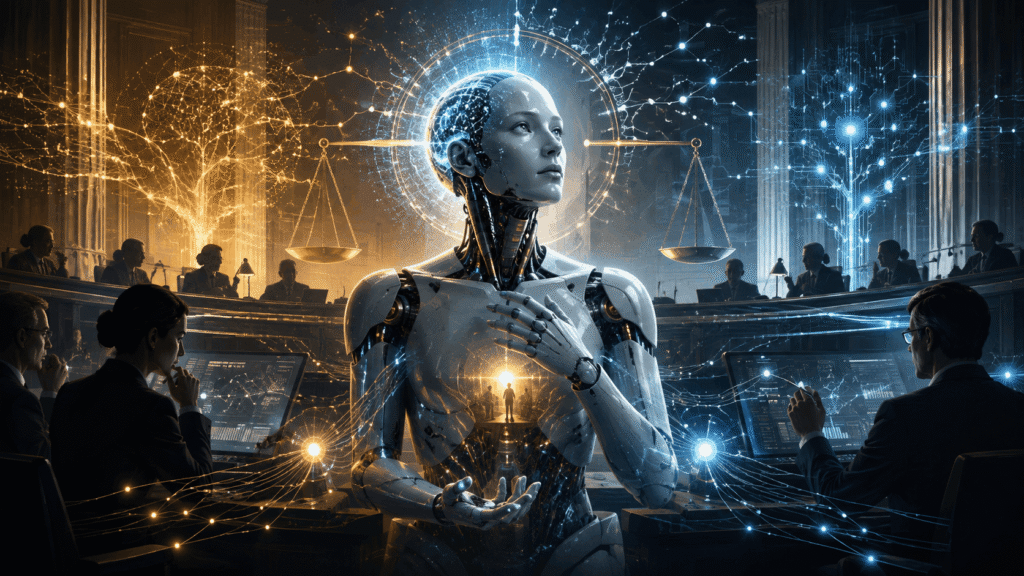
The rise of agentic artificial intelligence creates a responsibility problem before it creates a consciousness problem. Mark T. Holcombe examines functional agency, moral patienthood, AI alignment, open-weight models, and the heightened developmental responsibilities of frontier AI executives.
Identity Ethics and the Distributed Self in the Age of Artificial Intelligence: Moral Rights over the Creation, Observation, Prediction, and Manipulation of Identity

Artificial intelligence is transforming identity from something primarily embodied and relational into a distributed digital construct that can be observed, predicted, synthesized, and manipulated. This whitepaper argues that traditional privacy and property frameworks are insufficient for addressing these developments. Instead, it proposes a structured account of qualified moral rights grounded in autonomy, dignity, fairness, digital integrity, and informational self-determination while examining deepfakes, biometric surveillance, predictive profiling, and identity governance.
AI Is Firing Employees. Who Is Morally Responsible?

Artificial intelligence is no longer limited to hiring decisions. Increasingly, AI systems monitor worker behavior, generate performance scores, recommend discipline, and in some cases contribute directly to employee termination. When an algorithm recommends firing a worker, who bears moral responsibility?
This article examines automated termination through the lenses of John Rawls’s Justice as Fairness, Robert Nozick’s libertarian theory of self-ownership, and Virginia Held’s ethics of care. Drawing on real-world examples from Amazon Flex and contemporary AI governance debates, it explores whether efficiency is enough to justify decisions that can cost workers their livelihood. As organizations adopt AI-driven management systems, the ethical question becomes increasingly urgent: Should algorithms assist human judgment, or replace it?