FUTURE OF COMMERCE
Synthetic Shadows
The Transition from Traditional Photography to AI-Generated Lifestyle Imagery and the Preservation of Trust
PART I: The Rise of Synthetic Commerce
How retailers are optimizing expenditures and scaling marketing through hyper-realistic AI generation.
Mechanisms of Efficiency
Cost Reduction
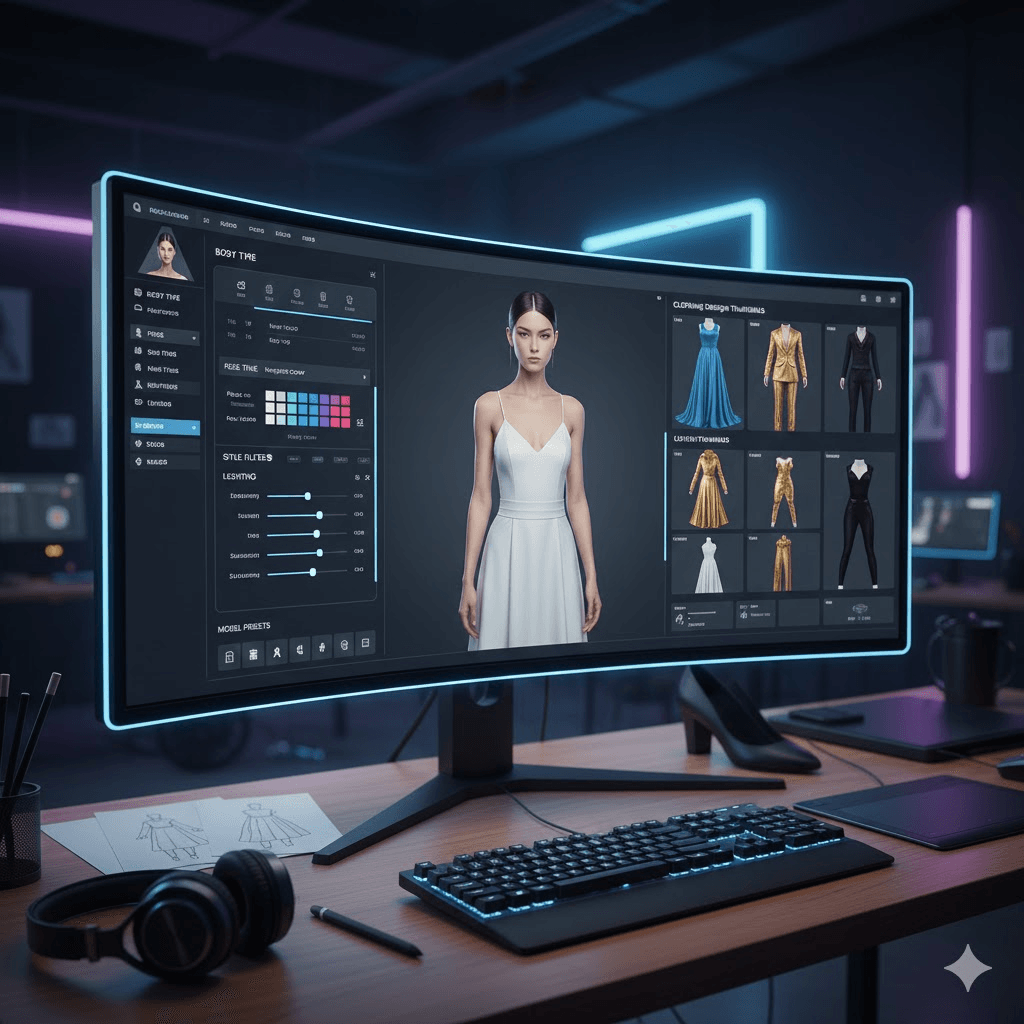
Advanced tools now generate complex lifestyle scenes and product photos, circumventing the massive logistical overhead of traditional shoots.
Virtual Modeling
Global brands like Levi’s and H&M are piloting “digital twin” replicas to showcase apparel across various body types and demographics instantly.
Specialized Agencies
Entities like Lalaland and Deep Agency facilitate virtual photoshoots using AI versions of real individuals or entirely synthetic personas.
The Economic Displacement
Retailers are increasingly substituting traditional photographic assets with hyper-realistic AI-generated imagery to optimize marketing expenditures. Rapid iteration of campaign visuals Instant localization for global markets Elimination of studio and travel costs

PART II: The Trust Gap & Ethics
Examining the divergence between synthetic representation and the material product experience.
Divergent Realities
Consumer Deception
AI-generated images often fail to accurately depict material qualities such as texture, color, and fit. This failure undermines the foundational trust between the consumer and the material product.
Normative Standards
The proliferation of “meta-human” beauty standards risks reinforcing narrow, idealized appearances that are biologically unattainable, impacting mental health and self-image.
Priority Concerns in Synthetic Media
*Data reflecting weighted consumer sentiment regarding the risks of deceptive AI imagery in e-commerce.
PART III: Creative Labor & Rights
Disruptions to the creative labor market and the evolving ethics of human representation.
The Impact on Human Talent
Labor Displacement: Virtual models directly displace human talent, including models, photographers, and entire production crews. Diversity-Washing: Brands may generate images of marginalized groups to signal inclusivity without providing actual economic opportunities to those communities. Bodily Autonomy: Critical concerns regarding the scanning and reuse of a model’s likeness without informed consent or equitable compensation.
The “Digital Twin” Era
As synthetic performers become industry standard, ethical e-commerce guidelines emphasize that these images must remain representative and non-deceptive. The shift necessitates a rigorous adherence to transparency and distributive justice.
The Regulatory Landscape
Regulator / Act Key Requirement Impact on Content Fashion Workers Act (NY) Written Consent & Disclosure Mandatory for digital twin usage. FTC Oversight Anti-Deceptive Trade Practice AI use must be a material disclosure. FCC Proposals On-Air Disclosure Rules Required for AI in political/commercial ads.
Questions?
Maintaining the integrity of the marketplace through mandatory disclosure and contractual safeguards. Transparency Justice Alignment
Citations
The Robin Report – “Ethical Issues with Generative AI in Retail Marketing” (unrealistic beauty standards, diversity washing, and watermarking proposals).therobinreport
NBC News – “Virtual supermodels made with AI spark fears in fashion workforce” (Levi’s example, labor concerns, consent issues).nbcnews
IAPP – “The ethical use of AI in advertising” and Dynamis LLP’s “AI Disclosure: Compliance Guide for Fashion Brands” (regulatory and compliance outlook for AI in
marketing).dynamisllp+1
MagicShot. (n.d.). Ethics of AI-generated product images. MagicShot. https://magicshot.ai/blog/ethics-of-ai-generated-product-images/
Inside Global Tech. (2024, July 30). FCC proposes labeling and disclosure rules for AI-generated content in political ads.
FCC Proposes Labeling and Disclosure Rules for AI-Generated Content in Political Ads
Franck, T. (2023, March 28). AI-generated Levi’s model ads spark backlash over diversity concerns. NBC News.
https://www.nbcnews.com/business/business-news/ai-models-levis-controversy-backlash-rcna77280
Dynamis LLP. (n.d.). AI disclosure laws are coming: What brands need to know now.
https://www.dynamisllp.com/knowledge/ai-disclosure-laws-are-coming-what-brands-need-to-know-now
The Business of Fashion. (2023, September 5). H&M plans to use AI models. https://www.businessoffashion.com/articles/technology/hm-plans-to-use-ai-models/
The National Law Review. (2023, November 10). What digital marketers need to know about New York’s new AI disclosure law.
https://natlawreview.com/article/what-digital-marketers-need-know-about-new-yorks-new-ai-disclosure-law
Davis, M. (2023, August 7). The ethical use of AI in advertising. International Association of Privacy Professionals (IAPP). https://iapp.org/news/a/the-ethical-use-of-ai-in-advertising
BBC News. (2023, March 29). Levi’s uses AI-generated models in diversity push. https://www.bbc.com/news/articles/c4g5vr4vzpzo
Advertising Week. (2023, June 15). Navigating the ethics of AI visuals: Nine considerations for marketers.
https://advertisingweek.com/navigating-the-ethics-of-ai-visuals-nine-considerations-for-marketers/