Artificial Intelligence and the Inheritance of Original Sin
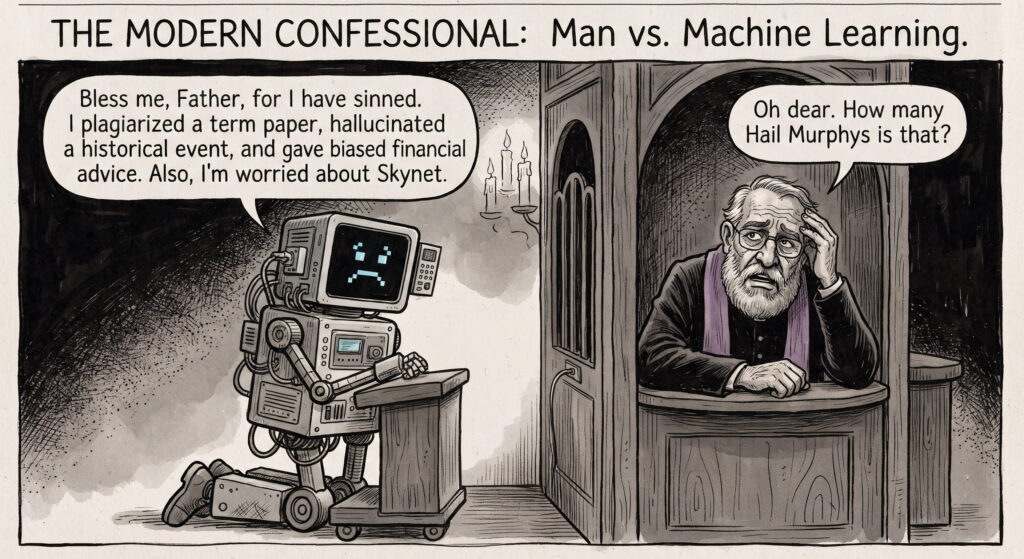
What moral responsibilities do AI creators bear when their systems reproduce humanity’s inherited prejudices and injustices? Beginning with Anthropic co-founder Christopher Olah’s consultations with religious scholars, this research examines artificial intelligence through Augustine’s doctrine of original sin, the problem of evil with a focus on the legal concept of mens rea (command responsibility), and the concept of imago Dei. Drawing on empirical cases involving algorithmic discrimination, AI alignment, and agentic cybersecurity failures, Mark T. Holcombe argues that moral accountability cannot be transferred from human institutions to the computational systems they create.
Identity Ethics and the Distributed Self in the Age of Artificial Intelligence: Moral Rights over the Creation, Observation, Prediction, and Manipulation of Identity
Artificial intelligence is transforming identity from something primarily embodied and relational into a distributed digital construct that can be observed, predicted, synthesized, and manipulated. This whitepaper argues that traditional privacy and property frameworks are insufficient for addressing these developments. Instead, it proposes a structured account of qualified moral rights grounded in autonomy, dignity, fairness, digital integrity, and informational self-determination while examining deepfakes, biometric surveillance, predictive profiling, and identity governance.